Osaka Unfiltered: Where Urban Pulse Meets Soul
Ever wondered what it feels like to step into a city that never blinks? Osaka doesn’t just buzz—it breathes energy. From neon-lit alleys to quiet backstreets humming with life, its urban space is a living organism. I walked its blocks for days, not chasing sights, but soaking in the rhythm. This isn’t just a travel story. It’s about how a city’s design shapes how we move, feel, and connect. Let’s dive into the real Osaka.
The First Impression: Osaka’s Urban Vibe in Motion
Arriving in Osaka is like being plugged into a live circuit. The city greets visitors not with grand plazas or serene gardens, but with motion—constant, layered, and purposeful. Whether stepping out of Osaka Station in Umeda or emerging from the underground maze of Namba, the sensation is the same: a rush of bodies, sounds, and light converging in orchestrated chaos. Unlike Tokyo’s polished precision or Kyoto’s hushed reverence, Osaka pulses with an unfiltered vitality. It’s loud, fast, and unapologetically urban, yet there’s warmth in its hustle—a sense that everyone, from salarymen to street vendors, is part of a shared rhythm.
This energy is shaped by design. The city’s wide avenues, elevated walkways, and dense network of underground passages create a vertical and horizontal flow that keeps people moving. Yet, unlike many modern metropolises, Osaka doesn’t feel sterile. Its infrastructure is worn in places, layered with decades of use, and that imperfection adds character. The signage is a mosaic of kanji, katakana, and English, glowing in reds, blues, and golds, guiding without dominating. Even the air carries a mix of grilled takoyaki, train lubricant, and faint floral notes from hidden planters—sensory cues that anchor the experience in place.
What sets Osaka apart is its embrace of controlled disorder. Where other cities prioritize order and symmetry, Osaka thrives on density and dynamism. Buildings lean into each other, shops spill onto sidewalks, and conversations rise above the hum of traffic. This isn’t inefficiency—it’s a different kind of efficiency, one built on adaptability and human interaction. The city doesn’t just accommodate crowds; it celebrates them. And for the visitor, this means immersion from the first step. There’s no buffer zone between observer and participant. You’re in it, part of the flow, feeling the city’s pulse in your stride.
Street Level: Where Life Unfolds in the In-Between Spaces
If Osaka’s skyline defines its silhouette, its streets define its soul. At ground level, the city reveals its true character—not in monuments, but in the spaces between buildings, beneath awnings, and along narrow lanes where daily life unfolds organically. These in-between zones are not afterthoughts; they are the city’s connective tissue. Take Tenjinbashi-suji, Japan’s longest covered shopping arcade, stretching nearly two kilometers from north to south. More than a retail strip, it functions as a social artery, where neighbors exchange greetings, children dart between stalls, and elders linger over steaming bowls of ramen.
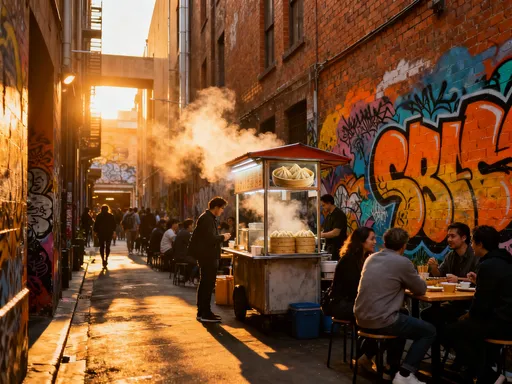
The design of these arcades—low-rise, weather-protected, and densely packed—creates an intimate scale that encourages lingering. Unlike sterile malls, these spaces are alive with texture: the creak of wooden stalls, the sizzle of yakitori on open grills, the rhythmic clatter of folding chairs being set up for evening gatherings. Street food isn’t just convenient; it’s a cornerstone of community life. Vendors know their regulars by name, and customers often eat standing at counters, fostering brief but meaningful exchanges. This informal economy thrives because the urban fabric allows it—narrow streets slow traffic, awnings provide shelter, and zoning permits mixed-use activity.
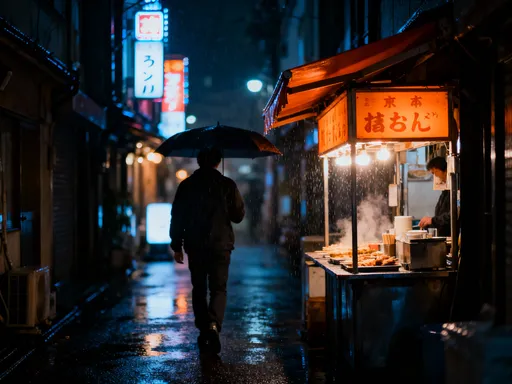
What’s remarkable is how these spaces accommodate spontaneity. A sudden rain doesn’t clear the streets; it transforms them. Umbrellas bloom like flowers, and shopkeepers quickly roll out extra mats to keep floors dry. A musician might appear with a portable amp, drawing a small crowd. These moments aren’t programmed—they emerge from a city designed for flexibility. Even in high-density areas, there’s room for the unplanned, the personal, the human. For visitors, this means discovery isn’t limited to guidebook highlights. It happens in the smell of freshly grilled taiyaki, the laughter from a pachinko parlor doorway, or the sight of a grandmother selling handmade pickles from a folding table. Osaka’s streets don’t just move people—they hold them.
Transit as Urban Choreography
In Osaka, the subway is not just a way to get from point A to point B—it’s a performance. Every day, millions move through a network of lines that function with near-surgical precision, yet feel surprisingly human. The choreography begins underground, where stations like Umeda and Namba serve as vast, multi-level stages. Escalators descend like waterfalls, platforms hum with anticipation, and digital displays flicker with arrival times down to the second. Yet, despite the scale, there’s an intuitive logic to the flow. Signage is clear, color-coded, and bilingual, minimizing confusion for both locals and visitors.
The efficiency of Osaka’s transit system is not accidental. It’s the result of decades of planning that prioritizes connectivity over spectacle. Lines crisscross the city in a dense grid, ensuring that no major destination is more than a 20-minute ride away. The Midosuji Line, one of the oldest, cuts diagonally through the urban core, linking key districts like Minami and Kita with relentless reliability. But beyond functionality, the system shapes the city’s rhythm. Commuters move in waves—rush hour surges, midday lulls, evening tides—each influencing the energy of surrounding neighborhoods. A train’s arrival doesn’t just deliver passengers; it redistributes life.
Stations themselves are micro-cities. Umeda Station, one of the busiest in Japan, connects multiple rail operators, subways, and private lines, serving over two million people daily. Beneath its surface lies a labyrinth of corridors, shops, and transfer points, yet navigation remains surprisingly straightforward. This is due in part to consistent design language: floor markings, overhead signs, and even the sound of train doors closing are standardized to guide behavior without instruction. Moreover, the integration of retail within transit spaces—kiosks selling bento boxes, convenience stores, and small eateries—turns waiting time into productive or pleasurable moments.
For the visitor, this seamless system removes friction. There’s no need to rely on taxis or ride-shares; the subway is faster, safer, and more affordable. A single IC card works across all lines, and real-time apps provide accurate updates. But more than convenience, the transit experience fosters a sense of inclusion. Standing shoulder to shoulder with office workers, students, and elderly couples, one becomes part of the city’s daily ritual. It’s a reminder that urban life, at its best, is not about isolation, but shared movement—thousands of individual journeys weaving into a collective dance.
Green Oases in the Concrete Maze
Amid Osaka’s relentless density, green spaces serve as vital pauses—places where the city breathes and its people reset. These parks are not decorative afterthoughts; they are essential infrastructure for mental and physical well-being. Osaka Castle Park, sprawling over 100 hectares, is the most iconic of these sanctuaries. Framed by moats and stone walls, the park surrounds one of Japan’s most famous historical landmarks, yet its true value lies in its accessibility. Locals don’t just visit for sightseeing; they come to walk, jog, picnic, and simply be.
The design of the park supports this everyday use. Wide, tree-lined paths accommodate strollers, cyclists, and elderly couples taking slow morning walks. Open lawns host family gatherings, where generations spread out mats and share bento boxes under cherry blossoms in spring or fiery maples in autumn. Playgrounds are modest but well-used, and benches are positioned to catch sunlight or shade, depending on the season. Even in winter, the park hums with activity—early risers doing tai chi, students studying under bare branches, photographers capturing the castle’s reflection in frozen ponds.
Less known but equally important is Tsurumi Ryokuchi, a former World Rose Congress site transformed into a public garden. Unlike the historical weight of Osaka Castle Park, Tsurumi Ryokuchi feels lighter, more experimental. Themed gardens—Japanese, English, and desert-style—coexist with open meadows and wetlands. It’s a place for quiet reflection, where the sound of wind through reeds replaces the city’s usual din. Families bike along shaded trails, and school groups gather for nature lessons, reinforcing the park’s role in environmental education.
What unites these spaces is their integration into the urban fabric. They are not isolated enclaves but connected by walking paths and transit links, making them easy to reach from surrounding neighborhoods. This accessibility ensures they serve diverse populations—not just tourists, but residents from all walks of life. In a city where space is at a premium, these green zones are democratic. They offer free entry, minimal rules, and maximum flexibility. Whether for exercise, relaxation, or socializing, they provide balance—a counterpoint to the vertical intensity of downtown. In doing so, they remind us that a truly livable city isn’t just efficient; it’s humane.
The Architecture of Density: Living Vertically, Thinking Horizontally
Osaka’s skyline tells a story of adaptation. Unlike the uniform towers of some global cities, its architecture is a patchwork of eras and functions. Futuristic skyscrapers like the Umeda Sky Building rise beside low-rise commercial blocks, narrow family homes, and retro Showa-era motels. This mix isn’t haphazard—it reflects a pragmatic approach to urban growth. With limited land and high demand, Osaka has learned to build up while preserving horizontal connections. The result is a city that feels dense but not oppressive, vertical but still human-scaled.
Mixed-use development is central to this balance. In districts like Namba and Shinsaibashi, a single building might house a department store on the ground floor, offices on the middle levels, and apartments above. This vertical layering reduces the need for long commutes and keeps neighborhoods active throughout the day. A coffee shop on the first floor serves office workers in the morning, shoppers at noon, and residents in the evening. The constant turnover of users ensures that streets remain lively and safe, a phenomenon urban planners call “eyes on the street.”
Yet, Osaka doesn’t sacrifice intimacy for efficiency. Many buildings retain small details that soften their scale: recessed entrances, rooftop gardens, or hand-painted signs. Even in high-rise zones, sidewalks are wide enough for conversation, and alleys branch off like capillaries, leading to hidden cafes or laundromats. This horizontal thinking—prioritizing walkability and connectivity—ensures that density doesn’t equate to isolation. People live close together, but they also interact.
The city’s approach to redevelopment further illustrates this balance. When older buildings are replaced, they’re often upgraded with seismic resilience, energy efficiency, and public amenities like plazas or bike racks. But the street grid remains largely intact, preserving the neighborhood’s identity. This respect for continuity allows communities to evolve without erasing their history. For the visitor, this means Osaka feels both modern and familiar, innovative yet grounded. It’s a city that builds for the future without forgetting the past.
Nightscapes: When the City Transforms
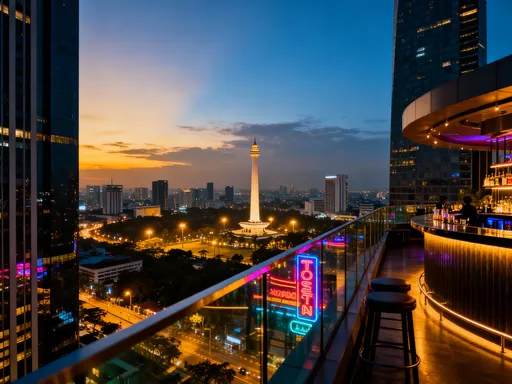
As dusk falls, Osaka doesn’t quiet down—it recharges. The city’s nighttime persona is one of its most defining features, a transformation powered by light, sound, and human energy. Dotonbori, the most famous entertainment district, becomes a canyon of neon, where giant moving signs of crabs, robots, and smiling chefs pulse above the crowds. The Glico Running Man, perched above the street, has become a symbol of Osaka’s unrelenting spirit. But beyond the spectacle, there’s a deeper logic to the nightscape—one of safety, vibrancy, and emotional engagement.
Illumination in Osaka is not just decorative; it’s functional. Bright signage, well-lit sidewalks, and strategically placed streetlights create a sense of security, encouraging people to linger. Unlike cities where nightlife feels confined to clubs or bars, Osaka’s evening energy spills into public spaces. Families stroll along the Dotonbori Canal, couples share okonomiyaki at outdoor counters, and groups of friends take selfies beneath glowing dragons. The lighting design—warm, dynamic, and layered—shapes mood as much as visibility, turning ordinary streets into stages of celebration.
Other areas, like Shinsekai, offer a different nocturnal flavor. Once a futuristic amusement district, it now wears its nostalgia proudly. The Tsutenkaku Tower, lit in vintage red and white, stands as a beacon of Showa-era optimism. Narrow streets are lined with small eateries serving kushikatsu, their counters packed with locals and curious visitors. The lighting here is less flashy, more intimate—exposed bulbs, hand-painted signs, and the soft glow of kitchen fires. It’s a reminder that vibrancy doesn’t require extravagance; it thrives on authenticity and warmth.
The emotional pull of Osaka at night lies in its inclusivity. Whether you’re dining at a high-end restaurant or slurping ramen at a standing bar, the city welcomes you. There’s no pressure to conform, no unspoken rules. The noise, the colors, the laughter—all of it feels earned, lived-in. For visitors, this means nighttime isn’t an add-on; it’s a core part of the experience. To know Osaka is to walk its streets after dark, to feel the warmth of a takoyaki stall, to join the flow of people who aren’t in a hurry to go home. The city doesn’t sleep; it dreams in neon.
Hidden Layers: Offbeat Neighborhoods and Local Life
Beyond the postcard views and tourist circuits, Osaka reveals its most authentic self in quieter corners. Neighborhoods like Nakanoshima, Temmabashi, and Hirano offer a different rhythm—one shaped by daily routines, local pride, and understated beauty. These areas aren’t hidden because they’re secretive, but because they don’t perform for outsiders. They exist for the people who live, work, and age within them.
Nakanoshima, a slender island between two rivers, is a blend of civic elegance and quiet industry. Home to city offices, libraries, and cultural centers, it also hosts tree-lined promenades where office workers take lunchtime walks. The Osaka Central Public Hall, a Meiji-era Western-style building, stands as a monument to the city’s cosmopolitan history. Yet, there are no souvenir shops or tour groups—just locals reading on benches, cyclists commuting, and the occasional street musician. The pace is measured, the atmosphere one of dignified calm.
Temmabashi, adjacent to Osaka Castle, feels residential and rooted. Narrow streets lined with single-family homes give way to small shrines, neighborhood markets, and mom-and-pop restaurants. Here, the architecture is low and personal—wooden facades, potted plants, hand-drawn price tags in shop windows. It’s common to see elderly residents tending front gardens or children playing in cul-de-sacs. There’s no grand design, but a deep sense of care. Community spaces, like local parks and temple grounds, serve as informal gathering spots, reinforcing social bonds.
Hirano, further east, is even less tourist-trodden. Once a rural area, it now functions as a residential hub with strong local identity. Weekly markets, neighborhood festivals, and temple fairs keep traditions alive. Small plazas host tai chi groups in the morning and dance circles in the evening. The urban design here prioritizes livability over spectacle—wide sidewalks, bike lanes, and ample greenery. It’s a reminder that cities aren’t just for visitors; they’re for the people who call them home.
Exploring these areas requires no itinerary—just curiosity. A wrong turn might lead to a hidden shrine, a bakery with legendary melon pan, or a conversation with a shopkeeper who remembers your face. These moments don’t fit neatly into travel guides, but they define the soul of a place. In a world of curated experiences, Osaka’s offbeat neighborhoods offer something rarer: authenticity without performance.
Conclusion: Rethinking Urban Space Through Osaka’s Lens
Osaka is not a city of perfect symmetry or quiet elegance. It is loud, layered, and alive—a place where urban design serves not just function, but feeling. Its strength lies in its ability to balance efficiency with warmth, density with humanity, and spectacle with sincerity. From the choreography of its transit to the intimacy of its backstreets, every element contributes to a living system that invites participation rather than observation.
What can other cities learn from Osaka? That urban life doesn’t have to be sterile to be efficient. That chaos, when rooted in human scale, can foster connection. That light, sound, and texture are as important as infrastructure. And that the best cities are not just navigated, but felt—through the soles of your feet, the rhythm of your breath, the pulse of the crowd around you.
For travelers, Osaka offers a lesson in deep engagement. It asks not just that you see, but that you move, taste, listen, and linger. It rewards curiosity with moments of unexpected beauty—a grandmother’s smile at a market stall, the quiet hush of a riverside path at dawn, the shared laughter at a communal counter. To explore Osaka is not to check off landmarks, but to become part of its rhythm.
So step off the tourist trail. Walk without a map. Let the city guide you. In the end, the most meaningful journeys are not measured in miles, but in moments of connection. And in Osaka, those moments are everywhere—waiting in plain sight, beneath the neon, in the in-between spaces where life truly unfolds.